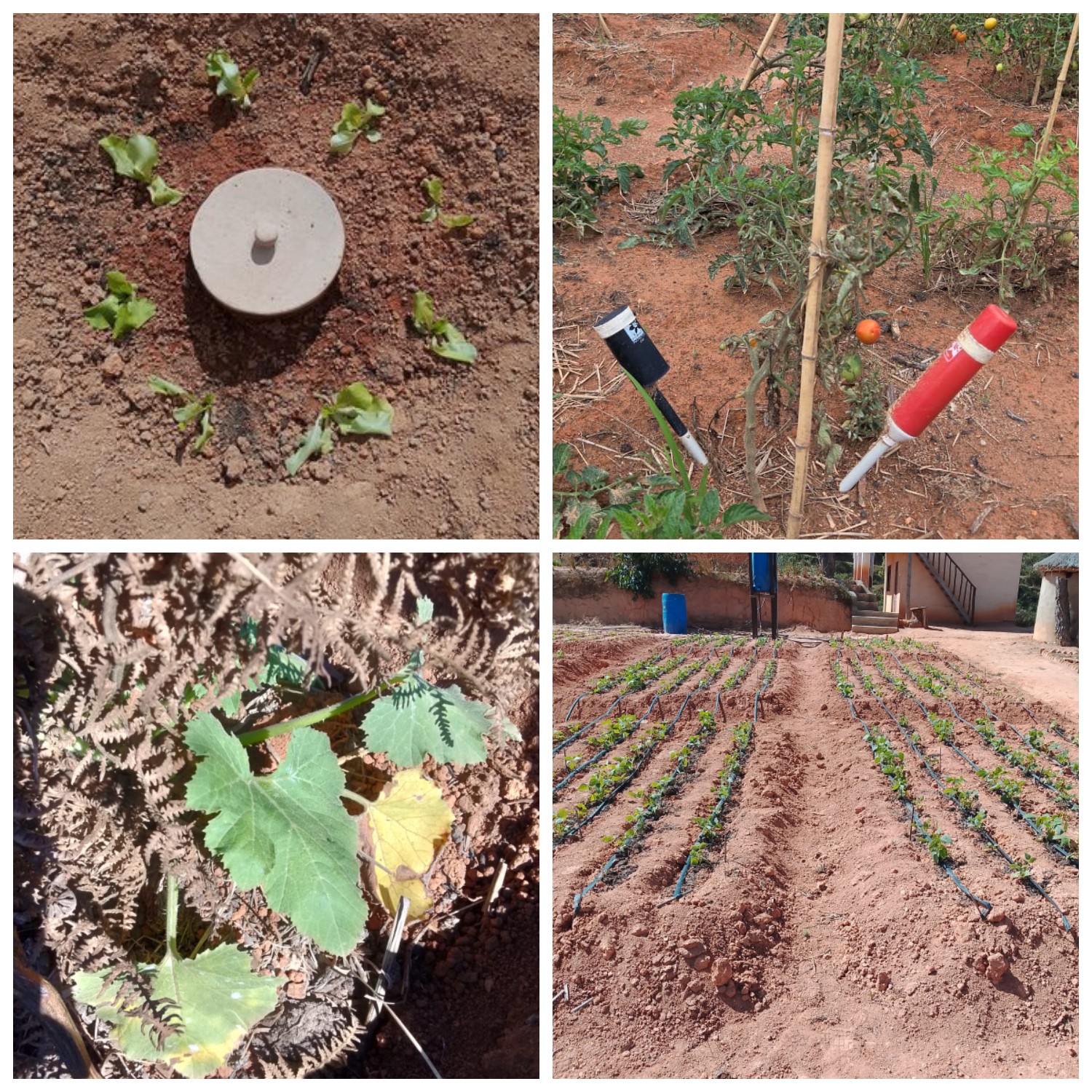
Climate change is no longer a distant threat—it is a present-day reality reshaping our environment and agricultural systems. Year after year, its impacts continue to intensify, driven by human activities and the continuous rise in greenhouse gas emissions. In return, nature responds with increasingly severe and unpredictable events that threaten the natural resources essential to human well-being.
Across Sub-Saharan Africa, these changes are reflected in rising temperatures, declining rainfall, and increasingly erratic rainy seasons. Agriculture, the largest consumer of freshwater resources and the foundation of food security, is among the sectors most affected. Water is one of the most critical factors determining agricultural productivity, while the demand for food continues to grow alongside the world's expanding population.
Meeting this challenge requires producing more food with less water. This is no longer an option but a necessity. Developing innovative, affordable, and sustainable solutions is essential to strengthen the resilience of agricultural systems and ensure stable food production despite the growing impacts of climate change.
Among the most promising approaches are drip irrigation systems, the use of buried clay pots (oyas), and mulching techniques. Although each of these methods has proven effective in improving water-use efficiency, their large-scale adoption remains constrained by economic and technical limitations, as well as by their limited capacity to cover extensive agricultural areas.
1. Drip Irrigation (Localized Irrigation)
v Strengths
- High water-use efficiency (60–90% water savings compared with sprinkler irrigation)
- Precise water delivery directly to the plant root zone, reducing foliar diseases
- Compatible with fertigation (localized fertilizer application)
- Suppresses weed growth between crop rows
- Well suited to row crops
v Weaknesses
- High initial investment (pipes, emitters, pumps), making it unaffordable for most smallholder farmers
- Requires regular technical maintenance due to emitter clogging
- Depends on a pressurized water source or pumping system
- Repairs can be difficult where replacement parts are unavailable locally
v Opportunities
- Increasing support through government subsidies and agricultural development projects
- Low-cost alternatives (perforated hoses, recycled plastic bottles) can be adapted and tested
- Solar-powered pumps combined with elevated water tanks enable gravity-fed irrigation without electricity
- Higher yield potential can improve profitability and offset the initial investment
v Threats
- Frequent theft of irrigation equipment in rural areas of Madagascar
- Limited availability of spare parts in remote locations
- Rapid deterioration of plastic components under ultraviolet (UV) radiation if left unprotected
- Dependence on technical support may result in system abandonment once external assistance ends
2. Oyas (Buried Clay Pots)
v Strengths
- Maximum water savings (80–90% compared with conventional surface watering)
- Slow and continuous water release, greatly reducing crop water stress
- Can be locally manufactured using readily available clay
- Requires no electricity, pumps, or pressurized water supply
- Provides complete autonomy for farmers with minimal external dependence
- Long service life when properly maintained
v Weaknesses
- Water discharge cannot be adjusted to meet changing crop water requirements during the growing season
- Prone to clogging by mineral deposits or root intrusion, requiring regular cleaning
- Limited irrigation coverage depending on pot size (approximately 30–50 cm radius), requiring many oyas for large fields
- Manual refilling is labor-intensive and time-consuming over large cultivated areas
v Opportunities
- Abundant clay resources are available in Madagascar
- Promotes local economic development through production by local artisans
- Particularly suitable for home gardens and small-scale vegetable production
- Encourages the preservation and transmission of traditional pottery skills
- Can be combined with mulching to maximize water conservation
v Threats
- Variable quality of local clay results in inconsistent porosity and water-release performance
- Difficult to standardize and scale up for widespread adoption
- Susceptible to accidental breakage caused by animals or farming tools
- Limited local research on optimizing water-release rates according to crop requirements
3. Mulching
v Strengths
- Reduces soil evaporation by 30–50%, extending irrigation intervals
- Very low cost, using locally available materials such as straw, dry leaves, and crop residues
- Improves soil structure and organic matter over the long term while enhancing soil microbial activity
- Suppresses weed growth without the use of herbicides
- Moderates soil temperature and protects crops against light nighttime frost
- Easily accessible to virtually all farmers without requiring technical expertise
v Weaknesses
- Does not provide irrigation; it complements irrigation rather than replacing it
- May create favorable habitats for slugs, rats, and other rodents
- Poor management may maintain excessive soil moisture and promote root diseases
- Competes with livestock feed for available crop residues
- Decomposes rapidly during the rainy season, requiring frequent replacement
v Opportunities
- Can be integrated into virtually any irrigation system to improve water-use efficiency
- Living cover crops (e.g., Mucuna spp. and Tithonia spp.) can simultaneously provide mulch and improve soil fertility
- Adoption is facilitated by Conservation Agriculture systems already promoted in Madagascar
- Enhances the value of crop residues through circular resource use on the farm
v Threats
- Uncontrolled grassland or bush fires may destroy mulch and cultivated fields
- Competition with livestock through free grazing or pasture burning
- Negative perception among some farmers who associate mulch with poor field management or unremoved weeds
- Limited effectiveness during prolonged dry seasons when no supplemental irrigation is available
Mulching can be effectively combined with buried clay pots (oyas) for smallholder farms lacking irrigation infrastructure or with simple, low-cost drip irrigation systems. The most appropriate combination should be selected according to the farmer's production objectives, available resources, technical capacity, and cultivated area.
4. Use of a Plant Alarm Kit Coupled with a Mini Data Logger
v Strengths
- Real-time monitoring of plant water stress: the Plant Alarm alerts users when plants begin to experience water stress.
- Improved irrigation management: enables irrigation to be applied only when crops actually require water.
- Reduced water waste: minimizes irrigation water use while reducing the time and labor required for irrigation.
- Continuous data logging through the mini data logger (e.g., air temperature and relative humidity), enabling crop performance monitoring and analysis.
- Supports data-driven irrigation decision-making, reducing reliance solely on farmer experience or visual field observations.
- Improves crop yield and product quality through more efficient water management.
v Weaknesses
- High initial investment cost, making the technology less affordable for many smallholder farmers.
- Dependence on electricity or batteries, which may be difficult to replace or recharge in remote rural areas.
- Requires technical training to properly understand and interpret the recorded data.
- Regular sensor maintenance and calibration are essential to ensure accurate and reliable measurements.
- Limited durability if the equipment is not designed to withstand tropical conditions such as heavy rainfall, high temperatures, and dust.
- Limited access to spare parts and after-sales technical support in Madagascar.
v Opportunities
- Expansion of precision agriculture, even in smallholder farming systems.
- Agricultural development programs supported by NGOs, universities, and technical partners that can subsidize or finance these technologies.
- Climate change adaptation, which increases the need for more efficient and climate-smart water management practices.
- Integration with complementary technologies, such as weather stations and mobile applications.
- Generation of locally relevant datasets to support agronomic research and improve technical recommendations.
- Promotion of water-efficient agricultural practices through agricultural research and rural development initiatives.
- Shared ownership through farmer cooperatives or producer organizations, reducing investment costs and improving accessibility.
v Threats
- Limited purchasing power, restricting the adoption of these technologies by smallholder farming households.
- Risk of theft or damage to equipment installed in agricultural fields.
- Extreme weather events (cyclones, heavy rainfall, flooding) that may damage sensors and electronic components.
- Limited local technical support for equipment maintenance, repair, and monitoring.
- Dependence on imported equipment, resulting in supply delays, transportation costs, and exposure to exchange rate fluctuations.
- Limited acceptance by some farmers, who may prefer conventional irrigation practices and traditional management methods.