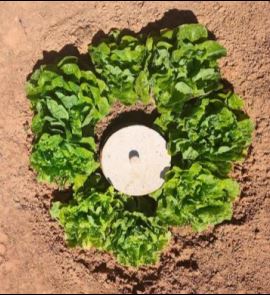
Influence of clay pot porosity on irrigation efficiency and the agronomic performance of Lactuca sativa
We tested three types of porous clay pots for irrigating lettuce and compared them with manual watering. The pots enabled water savings of 36% to 58%. Pot T3 (clay, sand, rice bran) produced the highest yield (1,737 g/m²), 13% higher than the control. Pot T1 (clay, sand) consumed the least water, with a yield equal to that of the control. Adding organic matter (rice husks or rice bran) increases porosity and yield.
12 Oct 2026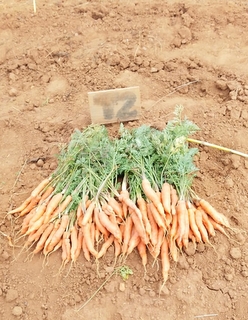
Effect of irrigation frequency on carrot (Daucus carota L., cv. Nantaise) growth and yield under compost-based organic fertilization: a study conducted over three years at two sites in the Amoron’i Mania region, Madagascar.
Irrigation every three days (T2) maintains root characteristics comparable to irrigation every two days (T1), while achieving 73% of the reference yield. Irrigation every four days causes greater yield losses. Further research should assess water savings, marketable root production, evapotranspiration, and the acceptability of the observed yield reduction under local conditions.
11 Oct 2026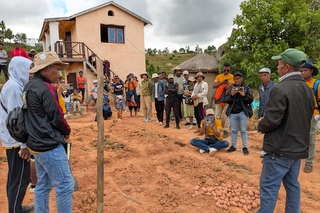
Which Fertilizer Should Farmers Choose to Improve Potato Yields?
This agricultural extension article presents the results of a field trial conducted at the Minimal Irrigation Project (MIP) demonstration site in Mahavariana, Talata Volonondry, in Madagascar’s Analamanga region. Its main objective is to help farmers identify effective, locally accessible, and economically beneficial fertilizers for improving potato production.
10 Oct 2026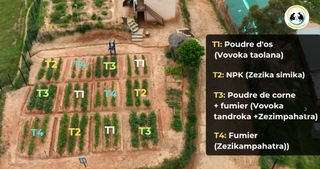
Comparison of the Effects of Different Fertilizers to Optimize the Productivity of Generation G5 Potato Tubers Intended for Food Production
Combining cattle manure and horn meal (T3) significantly improves the growth and yield of “Maneva mena” (G5) potatoes. Unlike cattle manure alone, this combination represents a promising fertilization alternative. Further trials under different soil and climatic conditions are recommended to confirm its agronomic effectiveness before wider adoption by farmers.
10 Oct 2026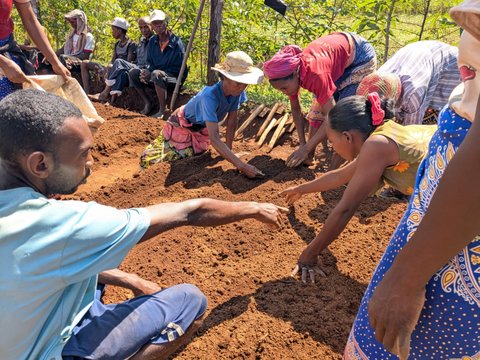
When the protocol encounters the limitations of the field: Capitalizing on experiences from the MIP (2024-2025)
Five concrete cases where research protocols were disrupted by unforeseen field conditions, across the regions of Analamanga, Alaotra Mangoro, and Amoron'i Mania. Root causes identified include untested prior hypotheses (4 out of 5 cases), underestimated external risks — technical or climatic (3 out of 5) — and assumed input quality without prior verification (2 out of 5). In response, the team adjusted its methodologies, documented failures as scientific results, and introduced a mandatory pre
8 Jun 2026
Purpose and objectives of the Minimal Irrigation Project
The Minimal Irrigation Project (MIP), led by FTA (Farming and Technology for Africa), is an agroecological initiative in Madagascar addressing the growing water crisis and food insecurity. By combining minimal irrigation techniques (rainwater harvesting, micro-irrigation), participatory research, and the valorisation of local knowledge, the project co-builds locally adapted solutions with farming communities. Its multi-stakeholder approach brings together farmers, researchers, technicians, and
8 Jun 2026