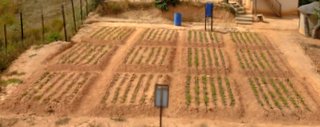
Green bean cultivation using drip irrigation
21 Oct 2026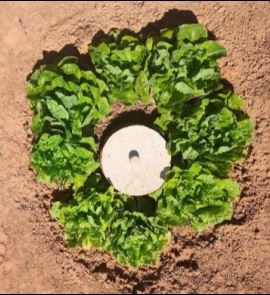
Influence of clay pot porosity on irrigation efficiency and the agronomic performance of Lactuca sativa
We tested three types of porous clay pots for irrigating lettuce and compared them with manual watering. The pots enabled water savings of 36% to 58%. Pot T3 (clay, sand, rice bran) produced the highest yield (1,737 g/m²), 13% higher than the control. Pot T1 (clay, sand) consumed the least water, with a yield equal to that of the control. Adding organic matter (rice husks or rice bran) increases porosity and yield.
12 Oct 2026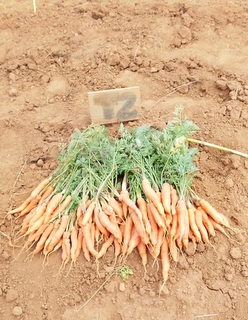
Effect of irrigation frequency on carrot (Daucus carota L., cv. Nantaise) growth and yield under compost-based organic fertilization: a study conducted over three years at two sites in the Amoron’i Mania region, Madagascar.
Irrigation every three days (T2) maintains root characteristics comparable to irrigation every two days (T1), while achieving 73% of the reference yield. Irrigation every four days causes greater yield losses. Further research should assess water savings, marketable root production, evapotranspiration, and the acceptability of the observed yield reduction under local conditions.
11 Oct 2026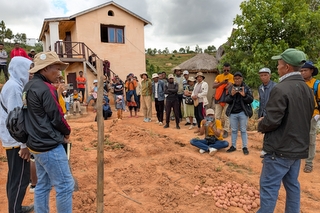
Which Fertilizer Should Farmers Choose to Improve Potato Yields?
This agricultural extension article presents the results of a field trial conducted at the Minimal Irrigation Project (MIP) demonstration site in Mahavariana, Talata Volonondry, in Madagascar’s Analamanga region. Its main objective is to help farmers identify effective, locally accessible, and economically beneficial fertilizers for improving potato production.
10 Oct 2026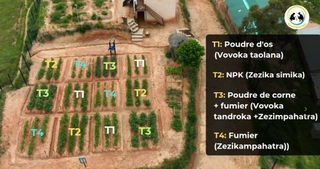
Comparison of the Effects of Different Fertilizers to Optimize the Productivity of Generation G5 Potato Tubers Intended for Food Production
Combining cattle manure and horn meal (T3) significantly improves the growth and yield of “Maneva mena” (G5) potatoes. Unlike cattle manure alone, this combination represents a promising fertilization alternative. Further trials under different soil and climatic conditions are recommended to confirm its agronomic effectiveness before wider adoption by farmers.
10 Oct 2026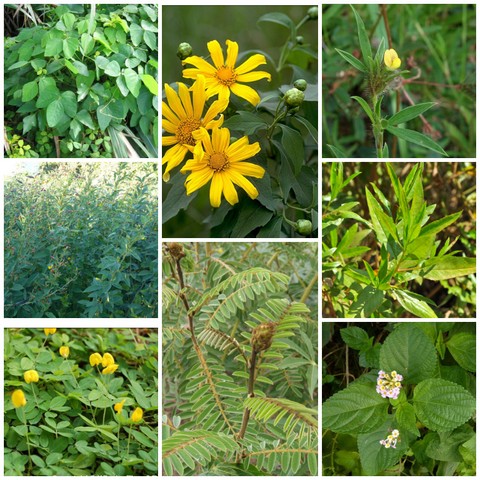
The nutrient content of each type of plant used in composting
Not all composts and green manures are created equal: the nutrient content of plant biomass varies widely depending on the species used. Not all composts and green manures are created equal: the nutrient content of plant biomass varies widely depending on the species used. Tithonia diversifolia (Mg:Bemangidy) (Mexican sunflower) and Tephrosia vogelii (Mg:Bemangidy) (fish bean) are the most complete biomasses, ranking high in both major nutrients (N, P, K) and micronutrients.
10 Aug 2026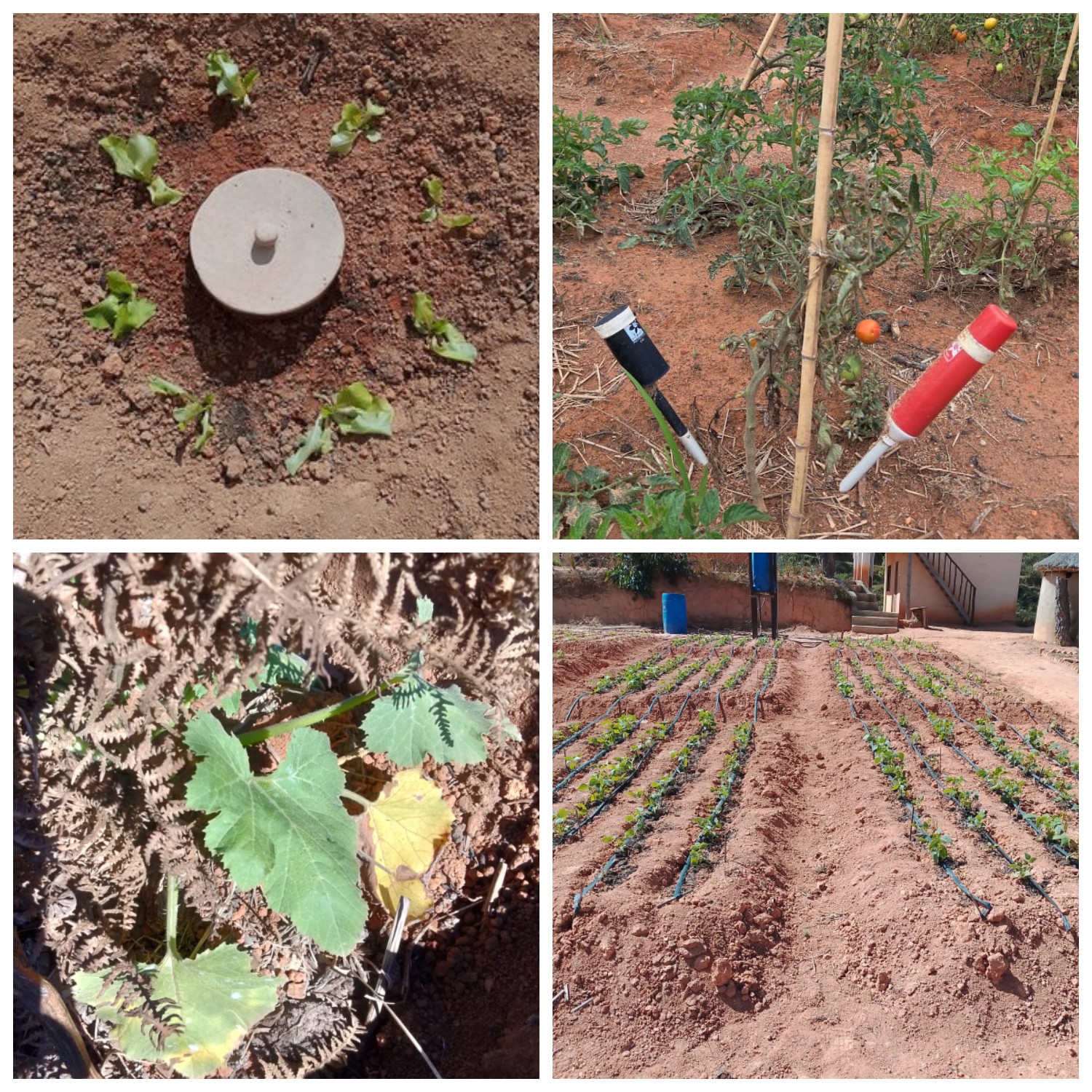
Some water management systems.
Climate change is no longer a distant threat; it has become a reality that is profoundly reshaping our environment and agricultural production systems. In Sub-Saharan Africa, this reality is reflected in rising temperatures, declining rainfall, and increasingly erratic rainy seasons. These changes directly affect agriculture, the largest consumer of freshwater and a cornerstone of food security. Under these conditions, producing more with less water is no longer an option but a necessity. Among
13 Jul 2026
Comparison of organic fertilizers on potatoes (Solanum tuberosum L.) — Ankazondrano, Amoron'i Mania
This study compares the effect of three organic fertilizers — poultry manure (T1), cattle manure (T2), and compost (T3) — on potato (Solanum tuberosum L. var. bandy akama) at Ankazondrano (Amoron'i Mania region). Conducted in a randomized block design on ferralitic soil with minimal irrigation (10 L/m²/week), the trial assessed tuber number, weight, and diameter per plant. Poultry manure (T1) proved the best-performing fertilizer, yielding 9.75 tubers per plant, an average weight of 22.16 g, an
15 Jun 2026
Valorization of coal waste on the petsaï (Brassica rapa var. chinensis) — Alaotra-Mangoro
This study evaluates the effect of wood charcoal residues, alone or combined with cattle manure, on the growth and yield of petsai (Brassica rapa var. chinensis) in the Alaotra-Mangoro region. Three treatments were compared in a randomized block design: T1 = cattle manure alone (10 t/ha), T2 = cattle manure + charcoal residues (5 t/ha), T3 = charcoal residues alone (5 t/ha), with irrigation at 30 L/m²/week. Treatment T2 (manure + charcoal residues) produced the highest aerial biomass (916 g/pla
15 Jun 2026